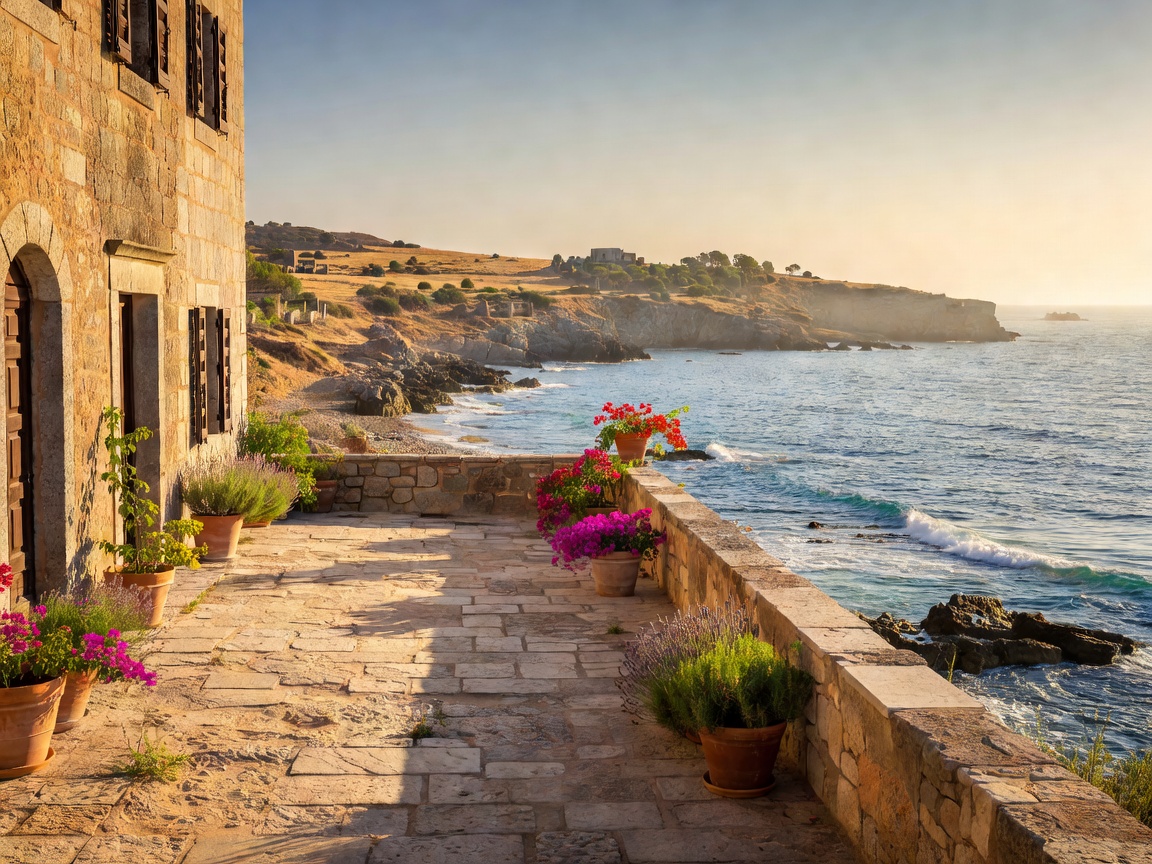
COASTAL CONDITIONS VARY
Coastal villas range from homes in established villages to isolated buildings above rocky coves. The word “coastal” describes a broad setting, not a standard distance to the water, path quality, view or level of shelter. Use the information below to create a property-specific checklist. Confirm exact conditions with the provider and current local information before travel.
Sea exposure, wind and salt air
Wind direction and strength can shape how comfortable an outdoor space feels. An open headland may be breezy while an enclosed courtyard nearby is sheltered. Ask which terraces are usable in typical conditions, whether there are protected seating areas and whether doors or shutters should be secured when the home is unattended. Conditions change, and no accommodation guide can guarantee calm weather.
Salt air may affect metal fittings, outdoor furniture and exposed finishes over time. This is a maintenance consideration, not a reliable measure of property quality. Inspect recent photographs for the current condition of balcony rails, exterior doors, outdoor showers and furniture. Ask whether cushions or shade equipment are stored during poor weather. Bring suitable footwear for uneven paths and check whether the route from the parking area is exposed or steep.
Terraces, swimming areas and coastal access
Terraces are not interchangeable. A roof terrace may offer a broad outlook but have limited shade. A ground-level patio may connect easily to the kitchen while facing neighbouring homes. Check whether the space is exclusive to the accommodation, what seating is provided, and how much shade is available at the hours you expect to use it. A photograph taken in one season does not show the sun angle or wind exposure for your dates.
Clarify what “near the sea” means in practical terms. Ask for the approximate walking route, surface, gradient, stairs and access points. Rocky coastline, cliffs and private boundaries can make a short map distance difficult to walk. Swimming areas may have changing access, local restrictions, currents or seasonal hazards. Do not infer swimming safety from clear water in a photograph. Consult relevant local guidance on arrival.
Where a pool is described, confirm whether it belongs to the booked home, is shared, and what safety arrangements and operating terms apply. No guide can confirm pool temperature, maintenance status or suitability for a particular swimmer. These details require direct confirmation.
Season, services and daily logistics
Shoulder-season stays may offer different conditions from peak summer. Some local services, transport routes or restaurants may have reduced hours or seasonal schedules. Wind, rain and cooler evenings can affect outdoor plans. In hotter periods, ask about bedroom cooling, shade and the property’s guidance for managing heat. Weather varies year to year; use current forecasts close to travel rather than relying on a seasonal average.
Nearby services can be less nearby on foot than the map suggests. Establish the distance to groceries, pharmacies, fuel and medical services, and check opening arrangements for your travel dates. Ask about the nearest practical parking, luggage unloading and whether the access road suits your vehicle. Coastal lanes can be narrow or steep. A larger rental vehicle may be harder to manoeuvre in a compact village.
Advantages and trade-offs
A coastal location can simplify time by the water and offer open horizons, outdoor dining and access to shoreline walks. These benefits depend on terrain and local access. Exposed sites may have less usable outdoor time in wind or strong sun. Stairs and slopes can make beach access demanding. Salt air and sand can mean more cleaning and care for belongings. Homes close to services may have more traffic or neighbouring activity than a remote property.
Key considerations
- Good for: travellers whose plans centre on coastal landscapes, sea access or time outdoors.
- What to check: actual water access, route gradient, wind exposure, shade, parking, services and seasonal opening patterns.
- Ask directly: which outdoor spaces are sheltered, how the route works for your group, and what pool or swimming arrangements apply.
Compare the building itself with its setting. Our villa design guide covers shade, glazing and ventilation. For a yard that feels protected without assuming complete seclusion, see privacy and outdoor living.
Keep essential requirements in writing. If you need step-free access, a child-safe pool arrangement, or a particular distance to services, ask for an explicit description and current photographs. “Sea view,” “walk to beach” and “quiet” can mean different things to different providers. Verify each term against your needs, and read booking and cancellation conditions before paying.
Plan around what is verifiable
Use a map to understand broad geography, then confirm the route and access with the provider. Check current local advice about coastal terrain and conditions. This website does not list properties, verify accommodation claims or arrange bookings. Its purpose is to help you ask precise questions before making your own decision.
KEY TAKEAWAY
View, shoreline access, swimming conditions and shelter are separate facts. Confirm each one.
NEED A CHECKLIST?
Send an editorial enquiry.
We can clarify this guide. We do not take bookings or verify properties.