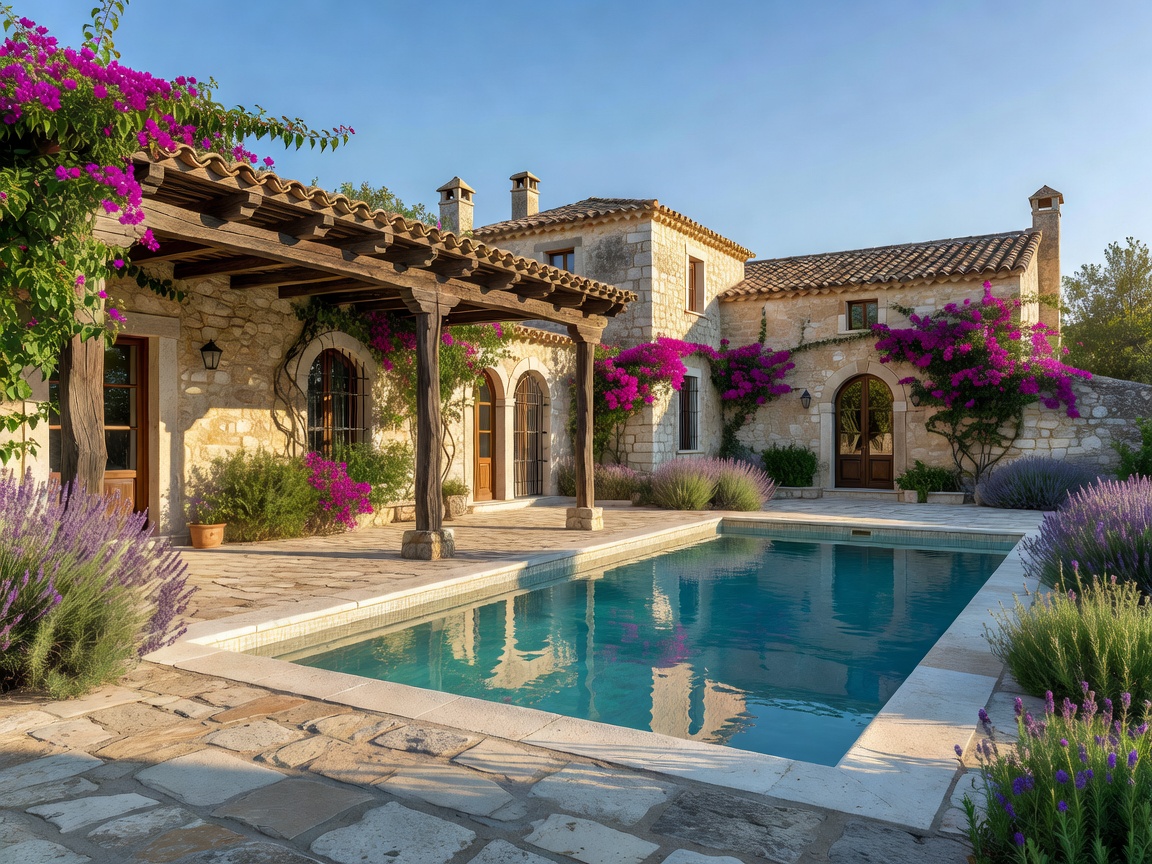
PRIVACY IS PROPERTY-SPECIFIC
Outdoor living means more than a terrace in a photograph. It includes how people move between rooms and garden, where meals can be prepared, how shade changes through the day and whether nearby homes overlook the space. No general label proves complete privacy. Evaluate each area separately and confirm arrangements with the responsible provider.
Courtyards, terraces, pool areas and gardens
A courtyard can create an enclosed outdoor room with protection from some wind and views. It may be overlooked from upper windows or carry sound between rooms. Ask which bedrooms face the courtyard, whether gates can be secured and how visitors reach the space. A terrace may connect well to the kitchen but be exposed to sun, wind or neighbouring sightlines. Request photographs taken from the seating level, not only wide landscape images.
Pool zones need practical checks. Confirm whether the pool is private to the accommodation or shared, its location relative to bedrooms and dining areas, and the safety measures in place. Ask about access gates, depth information, supervision expectations and any rules in the booking terms. Do not assume a pool is fenced, heated, open year-round or suitable for every swimmer. This site does not verify pool specifications or safety compliance.
Garden boundaries can be walls, hedges, fences or natural changes in terrain. Each offers a different level of screening and containment. A hedge may be seasonal or maintained at varying heights; a low wall may define a boundary without preventing views. Ask whether any outdoor area is shared with other guests, staff or neighbouring users. Clarify whether garden paths lead past the terrace or pool.
Sightlines, sound and shade
Privacy is about sight and sound. Look for direct views from neighbouring balconies, roads, shared paths and upper floors. Ask whether outdoor dining areas are overlooked and whether the property has temporary screening. A high boundary may improve visual seclusion but reduce daylight or airflow. Screens and planting can help, but their performance depends on location, season and maintenance.
Sound carries outdoors. Nearby roads, village activity, animals, agricultural work or neighbouring properties may be audible at different times. “Quiet” is subjective and seasonal. Ask what surrounds the house and whether any nearby land is actively used. If sleep is sensitive to noise, check bedroom orientation and window type as well as the outdoor setting.
Shade structures include pergolas, awnings, covered verandas and mature trees. Their coverage shifts with the sun and may vary by season. Find out which area has dependable shade at midday and whether seating can be moved. Outdoor cooking spaces should be considered alongside shade and ventilation; ask about equipment, operating instructions and any fire or use restrictions.
Dining, cooking and indoor/outdoor movement
A useful outdoor layout supports everyday tasks. Check the route between kitchen and dining table, whether steps or thresholds interrupt movement, and where outdoor cushions or dishes are stored. Confirm whether the exterior kitchen is included for guest use, what utensils are supplied and whether there are rules for cleaning or fuel. Do not rely on decorative staging as evidence of equipment.
Transitions can influence accessibility. Sliding doors may have raised tracks, terraces can have level changes, and garden paths may be loose or uneven. Ask for a step-by-step description from the entrance to the main seating area. If someone in your group uses a mobility aid, request measurements or current images of thresholds, door widths and bathroom access. A villa described as single-storey may still have steps between rooms and garden.
Advantages and trade-offs
Well-planned outdoor zones can provide a place for meals, reading and rest without requiring everyone to use the same room. Courtyards may feel sheltered; gardens may offer more room; roof terraces may open wider views. Each comes with trade-offs. Open terraces can lack shade or privacy. Enclosed courtyards can feel warm and transmit sound. Pools need supervision and clear rules. A larger garden may have uneven paths or require a longer route from the house.
Key considerations
- Good for: groups who expect to dine, relax or spend substantial time outside.
- What to check: shared areas, sightlines, shade timing, pool arrangements, thresholds and outdoor lighting.
- Ask directly: which spaces are exclusive, where neighbours can see in, and what equipment is actually provided.
For coast-facing terraces, consider wind and salt exposure in the coastal guide. For shaded rooms and building materials, see villa design. For a broader arrival and access checklist, use trip planning.
Ask for recent images of each outdoor zone and a simple site plan if boundaries or circulation matter. Written confirmation is useful when exclusive use, accessibility or safety arrangements are essential. Policies differ by property and jurisdiction; review terms before booking.
Confirm what the words mean
Terms such as “private garden,” “secluded terrace” and “pool villa” can describe different arrangements. Ask which people have access, whether any facilities are shared and what screening exists. This site provides general guidance only. It does not inspect sites, guarantee privacy or certify outdoor amenities.
KEY TAKEAWAY
Assess every outdoor zone for access, sightlines, shade and shared use. Do not infer complete privacy.
EDITORIAL ENQUIRY
Ask us about the guide.
We do not inspect or represent accommodation.