RURAL DOES NOT MEAN REMOTE BY DEFAULT
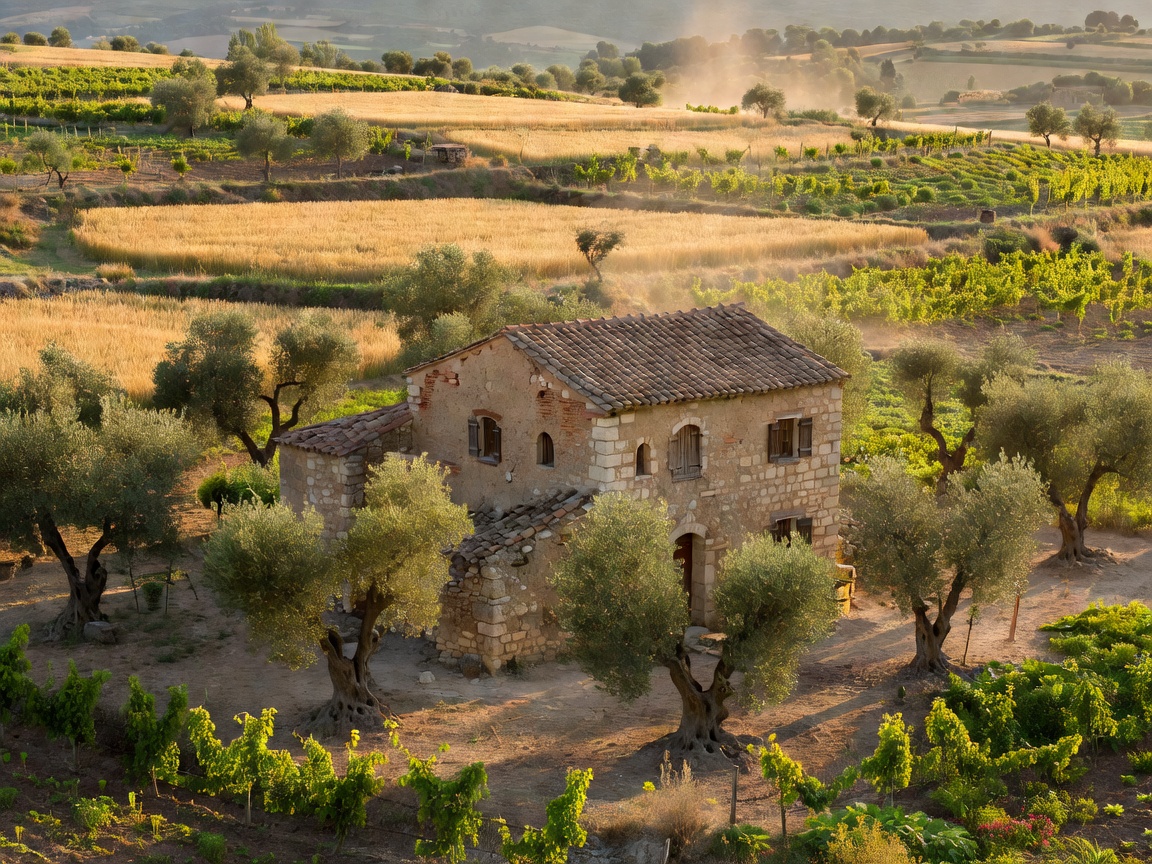
Mediterranean countryside includes cultivated plains, olive groves, vineyards as a landscape category, forest edges and small agricultural settlements. The distance between two rural homes can be substantial in practical terms. Maps show routes, not road width, lighting, surface condition or the time needed for daily errands. Confirm the details for the exact property before relying on a rural description.
Olive landscapes, fields and forest edges
Olive groves and other cultivated areas can create an open, orderly view. Their appearance changes through the year, and agricultural work may bring activity, machinery or seasonal noise. Ask whether fields beside the home are actively cultivated and whether access tracks are shared. A vineyard or farm landscape is not necessarily a visitor attraction or a guarantee of uninterrupted quiet.
Homes near forest edges may offer shade and a sense of enclosure. They can also have uneven ground, limited lighting or site-specific environmental considerations. Check exterior paths after dark, the distance from parking to the entrance, and whether there are steps or loose gravel. For guests with allergies or mobility needs, request more detail about vegetation, surfaces and routes. General descriptions are not a substitute for a property-specific access assessment.
Privacy is influenced by topography, neighbouring buildings, farm activity and the orientation of outdoor areas. A large plot does not automatically mean that every room or terrace is screened. Ask what can be seen from neighbouring homes and whether outdoor spaces are shared. Review the separate privacy and outdoor living guide for sightline questions.
Road access, vehicles and local services
Rural access roads may be narrow, winding, steep or unlit. The final section may be unpaved, and navigation data can be incomplete. Ask for written directions, a suitable meeting point if used, and practical guidance about vehicle size. Confirm whether standard rental cars can reach the entrance and where they can be parked. Do not assume that a large vehicle is necessary or suitable without checking.
Plan fuel, groceries and arrival timing. A property several kilometres from a town can take longer to reach than expected if the road is slow. Ask how far the nearest grocery shop, pharmacy, fuel station and medical service are by the actual route. Check current opening hours independently, especially outside busy periods. If you rely on public transport, verify the timetable and the last-mile connection rather than assuming a rural taxi or bus will be available.
Mobile signal and internet coverage can vary by terrain and provider. If reliable connectivity is essential for work or safety, request a specific description of the connection and test your own provider’s coverage using current maps. Ask how to contact the host or responsible manager if directions, utilities or arrival plans change.
Seasonal differences and daily comfort
Rural surroundings can change considerably with season. Harvest activity, dry vegetation, rain, mud, heat and cooler nights may affect paths and outdoor use. Flowering and leaf cover alter the appearance of the landscape. Ask what conditions are typical for the dates, but use current forecasts and local information for final decisions. Weather and agricultural schedules are variable.
Consider indoor comfort as carefully as scenery. Ask about heating, cooling, ventilation, water supply and any instructions for operating systems. Confirm whether outdoor lighting reaches the entrance and parking area. In a remote setting, clarify who handles a maintenance issue and what response arrangements are stated in the booking terms. Do not assume uninterrupted utilities or a particular response time unless terms explicitly say so.
Advantages and trade-offs
A countryside stay may offer a quieter setting, views across cultivated land and direct access to outdoor space. It can suit travellers who prefer a slower itinerary and are comfortable driving. The trade-offs can include limited services, dependence on a vehicle, longer transfers and fewer alternatives if weather changes. Agricultural surroundings can be active rather than silent. A rural house may have stairs, uneven paving or older systems that require extra questions.
Key considerations
- Good for: guests who value open landscapes and are comfortable planning transport and supplies.
- What to check: last-mile road, parking, service distances, mobile coverage, steps, lighting and seasonal activity.
- Ask directly: vehicle suitability, written arrival directions, outdoor boundaries and who to contact during the stay.
Compare rural access with coastal access in the coastal stays guide. If the building’s layout is your priority, review Mediterranean villa design. Neither setting is inherently more private, accessible or comfortable; the specific site determines that.
Choose a setting with evidence
Use current maps for broad planning, then seek a direct description of the final approach, route surfaces and essential facilities. Request recent images of access and outdoor areas where they affect your decision. Read arrival, cancellation and vehicle terms before booking. This site does not identify or verify individual properties. The guide is general information, not a guarantee about any location or service.
KEY TAKEAWAY
For a countryside stay, the final road and service distance matter as much as the landscape.
A PRACTICAL QUESTION?
Contact the editorial team.
We do not represent properties or arrange accommodation.